Qualified ≠ Hired: 5 Strategic Shifts to Master the Interview Process
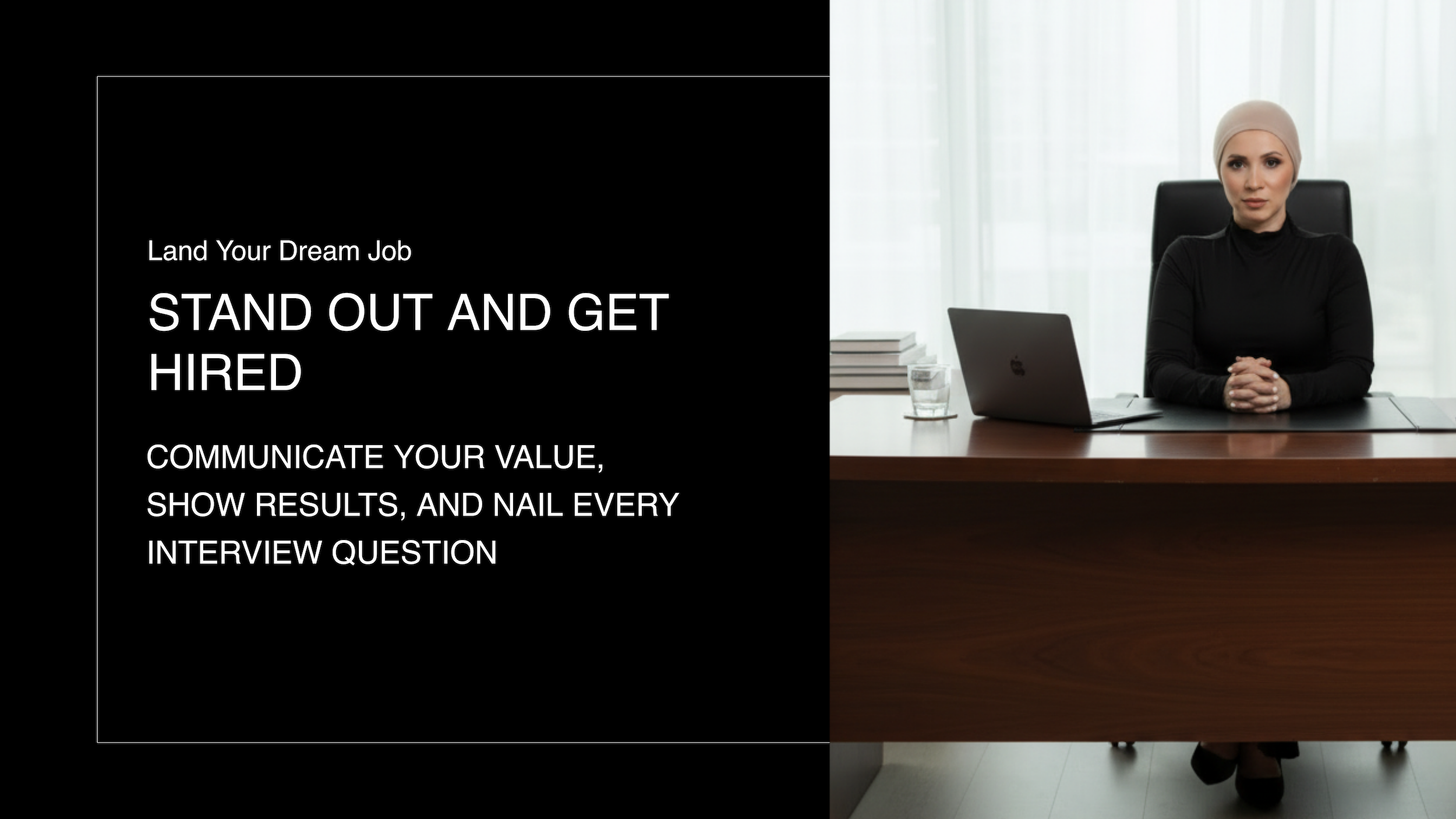
You prepped for hours. You did your research. You wore the right outfit. But when the interviewer asked, "Why should we hire you?" you froze—or worse, you gave a generic answer that made you sound exactly like every other candidate.
Here is the hard truth: Being qualified is not the same as getting hired.
Getting the offer isn't just about having the right skills on paper; it is about knowing how to communicate your value in a way that makes the hiring manager lean in and realize you are the missing piece of their puzzle.
It is time to stop interviewing like a candidate hoping for a chance and start communicating like a high-performer ready to make an impact. Here are the five interview secrets that actually get you hired.
1. Stop Reciting Your Bio (The "Alignment" Framework)
When an interviewer asks, "Tell me about yourself," most people make the mistake of reciting their resume chronologically. They talk about where they are from, where they went to school, and every job they have ever had.
The Shift: The interviewer isn't asking for your biography. They are asking for your professional narrative in the context of this role.
Use this simple three-part framework:
- Where you’ve been: Briefly mention your relevant background.
- Where you are: Highlight your current expertise.
- Why you are here: Connect the dots to why this specific role aligns with your skills and goals.
By connecting your past experience directly to the impact you want to make in their company, you move from "applicant" to "strategic fit."
2. Master the Narrative (The STAR Method)
Behavioral questions—those that start with "Tell me about a time..."—are where many candidates ramble. They get lost in the drama of the story rather than the solution.
The Shift: Structure your answer using the STAR Method:
- Situation: Briefly set the context.
- Task: Explain what needed to be done.
- Action: Detail the specific steps you took (focus on "I," not just "we").
- Result: Share the outcome using data and metrics.
Don’t just tell a story; prove your effectiveness. Did you save time? Did you increase revenue? Did you resolve a conflict that kept the project on track? High performers speak in results.
3. Turn Weakness into Growth
The most dreaded question is often, "What is your biggest weakness?" Please, do not say you are a perfectionist or that you work too hard. Hiring managers see right through that.
The Shift: Be real, but be strategic. Pick a genuine weakness that is improvable and not critical to the core function of the job.
The formula is: Real Weakness + Action Taken + Growth Shown.
For example, admit you used to struggle with public speaking, but explain how you took a course, started volunteering to lead meetings, and have since improved your communication confidence. This demonstrates self-awareness and a commitment to development—two traits every leader looks for.
4. Ask Strategic Questions
At the end of the interview, when they ask, "Do you have any questions for us?" saying "no" is a dealbreaker. It signals a lack of preparation and interest.
The Shift: This is your opportunity to show that you are already thinking about how to succeed in the role. Ask questions that demonstrate you care about the work, the impact, and the people.
- "What are the immediate projects I would be tackling in the first 90 days?"
- "How does this role contribute to the company's long-term goals?"
- "What does success look like after the first year in this position?"
These questions separate good candidates from great ones because they show you are focused on value contribution, not just job consumption.
5. Own the Follow-Up
The interview does not end when you walk out of the room. What you do in the next 24 hours matters.
The Shift: Send a follow-up email. Keep it short, professional, and specific. Thank them for their time, mention a specific topic you discussed to show you were listening, and reiterate your enthusiasm for the role.
If you don't hear back within the timeline they gave you, follow up again. Persistence—without being pushy—shows professionalism.
The Bottom Line
Getting hired isn't about being perfect. It is about being prepared, specific, and intentional.
You are not just looking for a job; you are looking for the right job where you can actually grow. When you use these strategies, you stop just showing up to interviews and start showing up as the solution they have been looking for.