Employee Engagement Tips That Go Beyond the Perks
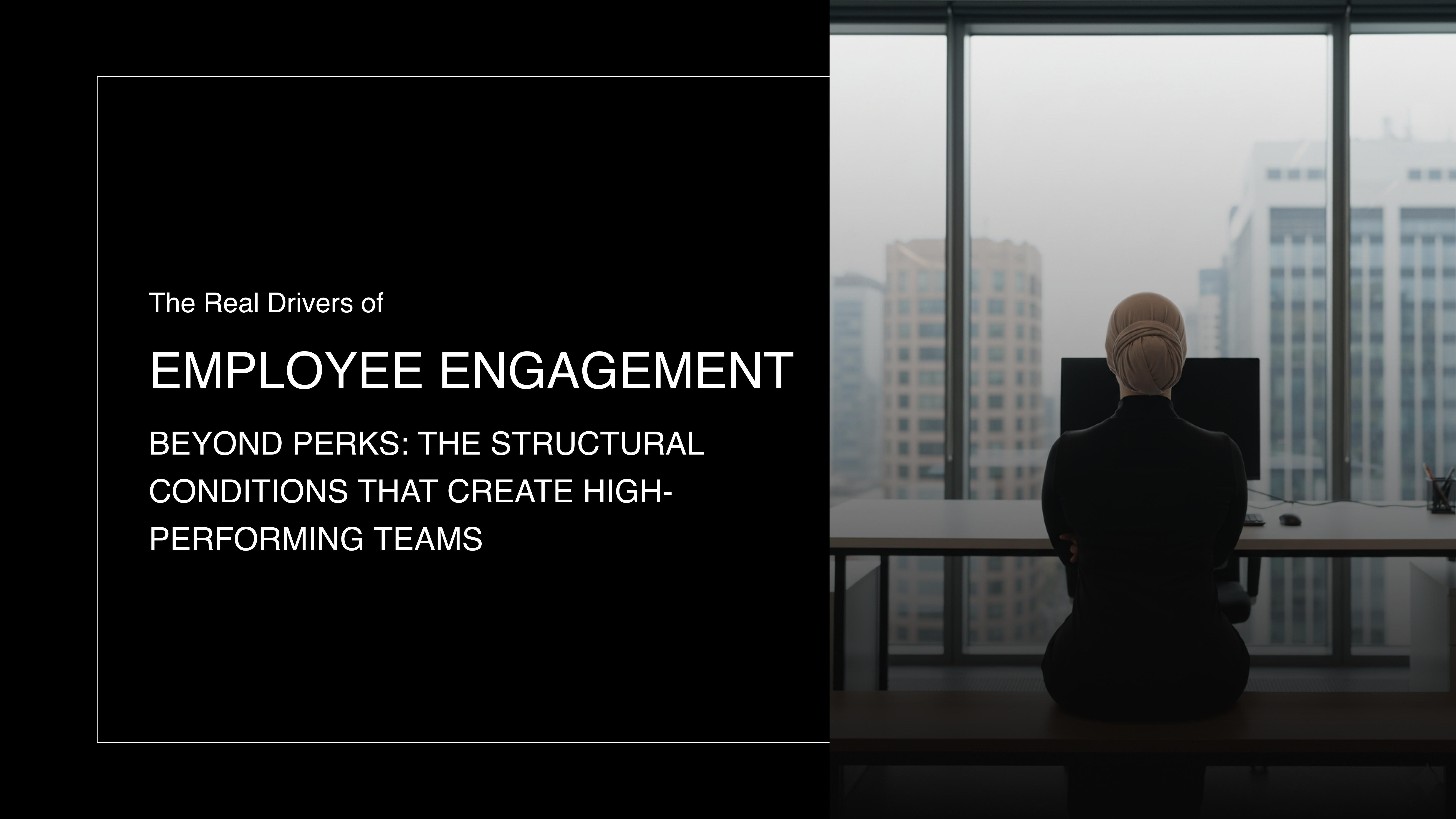
The employee engagement conversation has been dominated for years by a particular kind of thinking -- one that treats engagement as something you buy. Flexible hours. Wellness stipends. Team lunches. Recognition programs with point systems.
Organizations spend billions on these initiatives annually. And engagement scores, by most measures, remain stubbornly low.
This is not a coincidence. It is a signal.
When people are genuinely engaged at work -- when they bring discretionary effort, when they care about outcomes beyond their job description, when they advocate for the organization rather than quietly waiting for something better -- it is almost never because of the perks. It is because of something far more fundamental that most engagement strategies never address.
What Engagement Is Actually Made Of
Genuine engagement is the natural output of a specific set of conditions. When those conditions are present, engagement follows without being engineered. When they are absent, no amount of programming will produce it sustainably.
The first condition is meaning -- the felt sense that the work matters and that one's contribution connects to something larger than a task list. This is precisely why a strong, clearly communicated mission statement matters so much. A mission statement that is actively lived -- not just posted on a website -- gives people a reason to care. It expresses in concrete terms what the organization is working to achieve, and it gives every team member a shared foundation for understanding why their work counts. People can tolerate difficult work and demanding hours when they believe in the direction. What they cannot sustain is work that feels disconnected from a larger purpose.
The second condition is clarity -- knowing what is expected, how success is measured, and how one's role fits into the larger picture. Confusion is one of the most underestimated drivers of disengagement. It is exhausting to work hard without knowing whether you are working on the right things.
The third condition is growth -- a genuine sense that the work is developing the person, not just extracting from them. High performers, in particular, are exquisitely sensitive to whether their potential is being invested in or merely consumed.
Why Most Engagement Efforts Miss the Mark
The problem with most employee engagement tips is that they address symptoms rather than causes. Recognition programs address the symptom of people feeling unseen. Wellness perks address the symptom of people feeling depleted. Communication initiatives address the symptom of people feeling out of the loop.
None of these interventions touch the underlying condition that produces the symptom. And so the symptom returns -- often more severe, because now the organization has demonstrated that it is willing to invest in surface-level solutions rather than structural ones.
The leaders who build genuinely engaged teams do not start with engagement. They start with alignment. They build clarity about purpose and direction first. They ensure that each person understands how their work contributes. They create structures where growth is real rather than rhetorical. And engagement follows -- as a consequence, not a campaign.
The Manager Effect
No single variable predicts employee engagement more reliably than the quality of the relationship with a direct manager. This finding has been replicated in study after study and holds across industries, geographies, and organizational sizes.
What this means in practice is that engagement is not primarily an organizational program. It is a local experience, shaped by the day-to-day interactions between a person and the leader they report to. A brilliant company culture cannot compensate for a manager who does not know how to develop people, communicate expectations clearly, or create an environment where people feel seen and challenged.
This has significant implications for how organizations should think about leadership development -- and about the standards they set for who is allowed to lead people in the first place.
The Engagement Conversation Most Organizations Are Not Having
Here is something that rarely appears in the conventional employee engagement tips literature: engagement is a two-directional relationship. Organizations ask employees to bring discretionary effort, emotional investment, and genuine commitment. The question worth examining is what the organization is offering in return -- and whether that exchange is actually equitable.
People are remarkably perceptive about the gap between what an organization says it values and what its actual practices demonstrate. That gap, more than any single management misstep, is what erodes engagement over time.
Closing the gap requires looking honestly at the structures, practices, and decisions that shape daily life for the people on your team. It requires asking not just "are our employees engaged?" but "have we built an environment that makes engagement the rational response?"
Sustainable Engagement Is Built, Not Bought
The organizations with genuinely engaged teams have one thing in common: they treat engagement as a structural outcome rather than a morale initiative. They invest in the conditions that produce it -- clarity, purpose, growth, and the kind of leadership that makes people feel their potential is being taken seriously.
This is not complicated work, but it is deep work. It requires understanding your team as a system and knowing which elements to address first. It requires being willing to look at organizational practices that may be undermining the very outcomes you are investing in. And it requires a methodology that goes beneath the surface.
That methodology exists. And the distance between where most teams are and where they could be is significantly shorter than it appears from the inside.
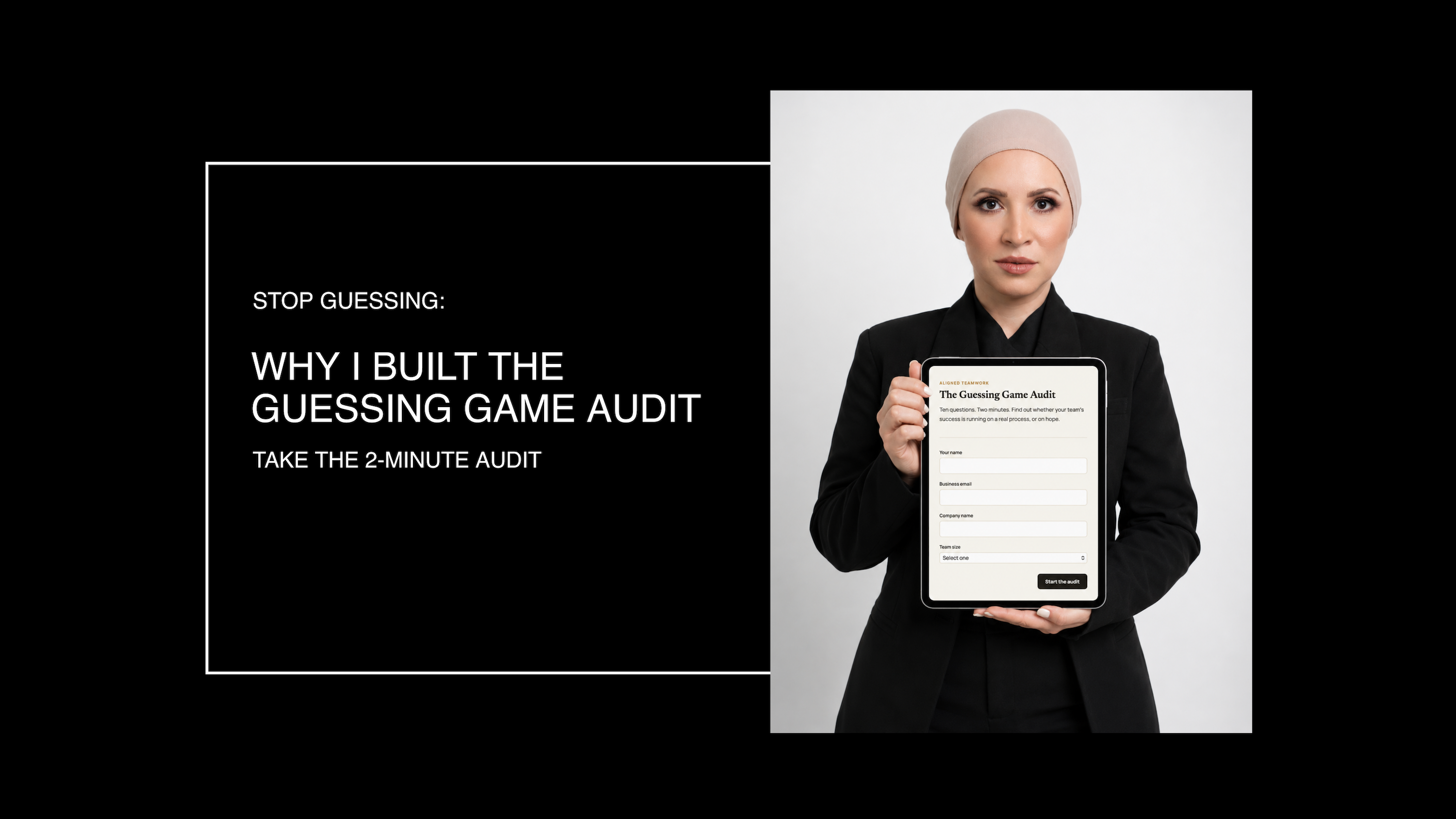
I am Aisha J, a strategic HR expert and founder of Aligned Teamwork. I work with business leaders across Canada, the USA, and the GCC to build high-performing teams through my proprietary People Alignment Process. To learn more or connect with me, visit alignedteamwork.com.